Ethiopian Green Coffee Terroir & Growing Environment
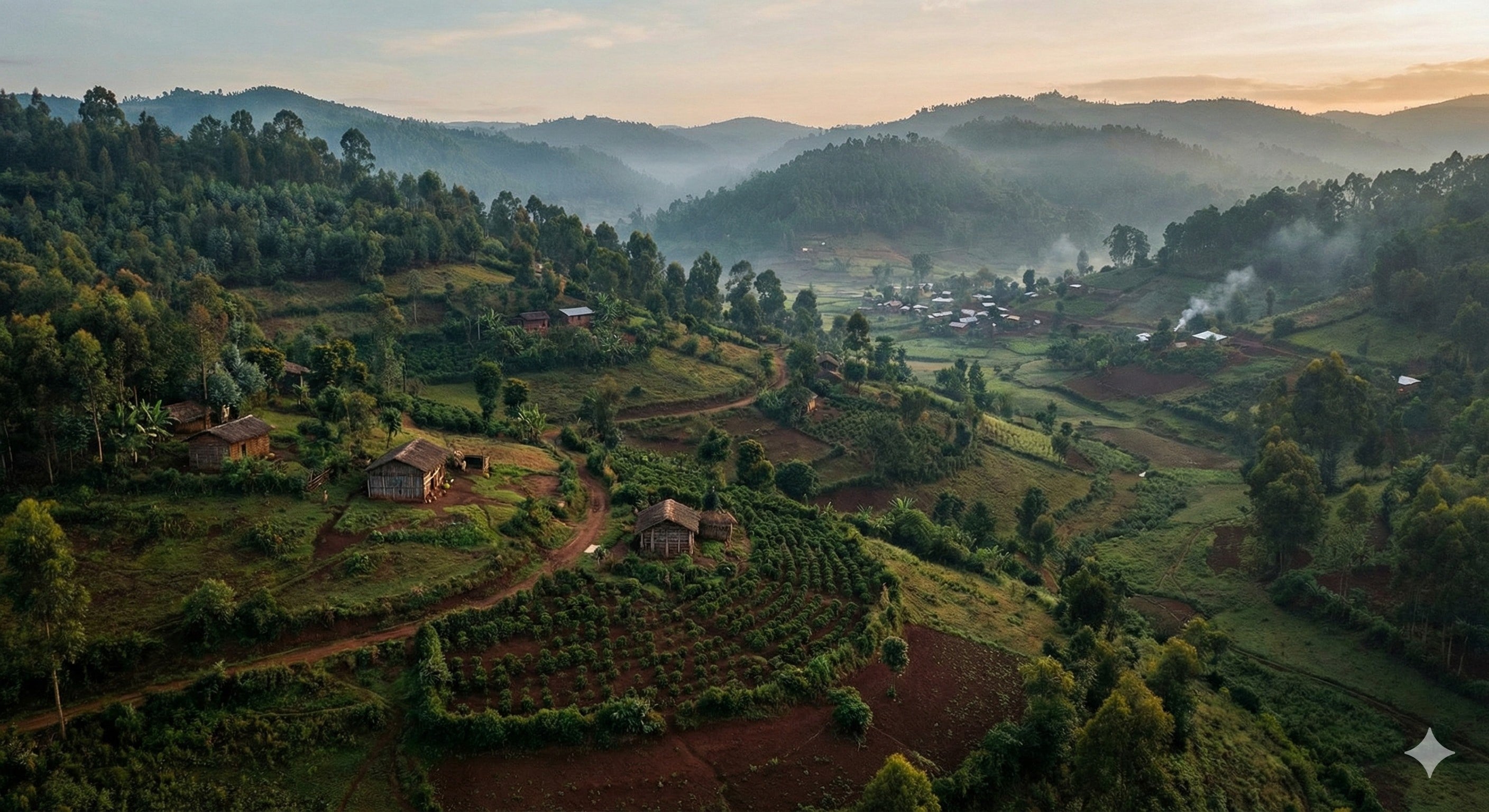
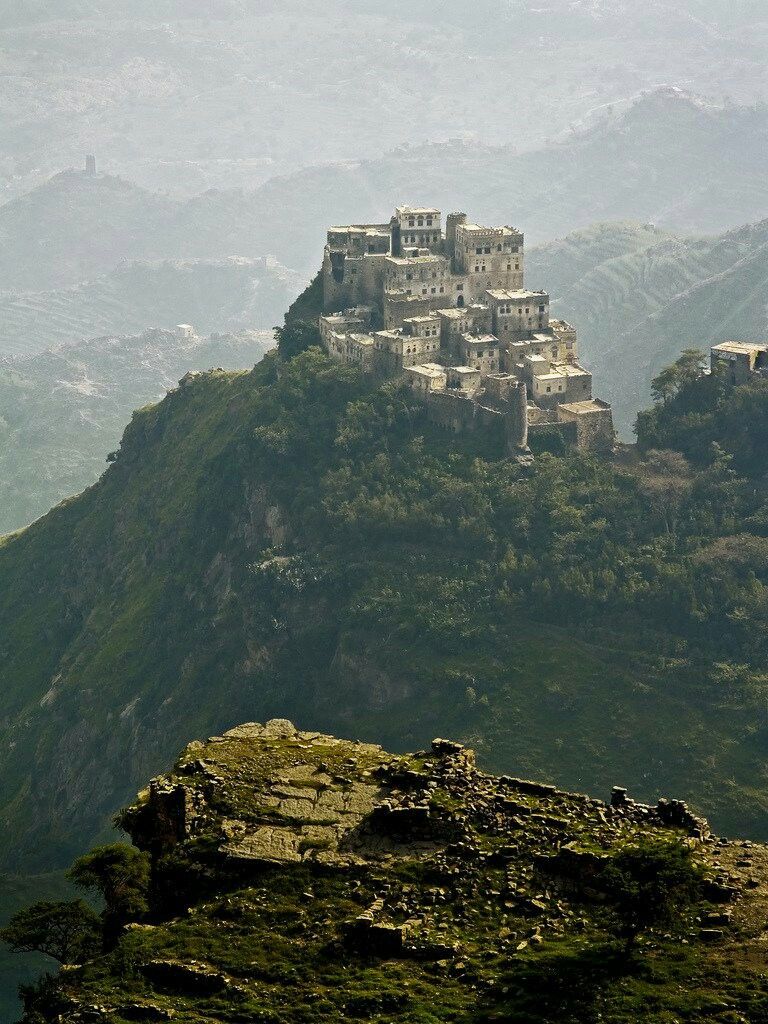
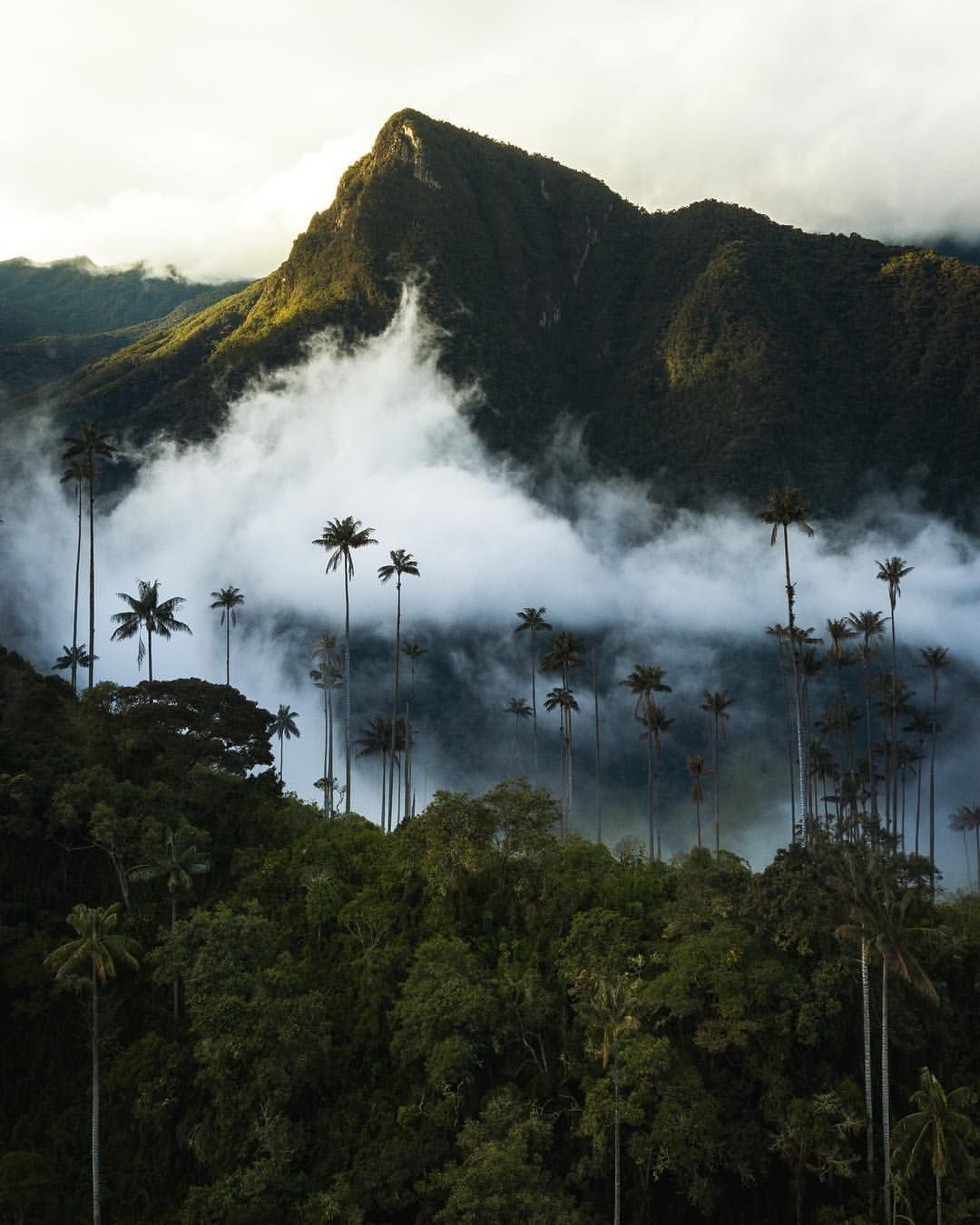
Ethiopia’s coffee character is shaped by one of the most complex coffee landscapes on Earth. Vast highland plateaus divided by the Great Rift Valley create countless microclimates, with coffee typically grown between 1,500–2,400 meters above sea level (masl), and in some cases exceeding 2,500 masl.
Cool temperatures at these altitudes slow cherry maturation, enhancing sugar development and acidity. Volcanic soils rich in minerals, combined with annual rainfall ranging from 860 mm to over 2,200 mm, provide ideal conditions for arabica to express exceptional aromatic complexity. Production spans forest, semi-forest, garden, and plantation systems, with smallholder garden coffee dominating—remaining naturally shade-grown and organically managed by deep-rooted tradition.
Arabica Genetics & Ethiopian Heirloom Varieties
Ethiopia is the genetic homeland of Coffea arabica, born from a rare natural hybridization between C. canephora and C. eugenioides in Ethiopian forests thousands of years ago. While the global specialty coffee market often relies on a narrow genetic base, Ethiopia preserves thousands of wild and locally adapted varieties.
Commercially labeled under the umbrella term “Heirloom,” these wholesale green coffees are in fact diverse regional landraces such as Kurume, Dega, and Wolisho, alongside carefully selected, disease-resistant JARC varieties like 74110 and 74112. This unmatched genetic reservoir is critical not only for flavor diversity but also for climate resilience and the future survival of arabica worldwide.
Sensory Profile of Ethiopian Specialty Coffee
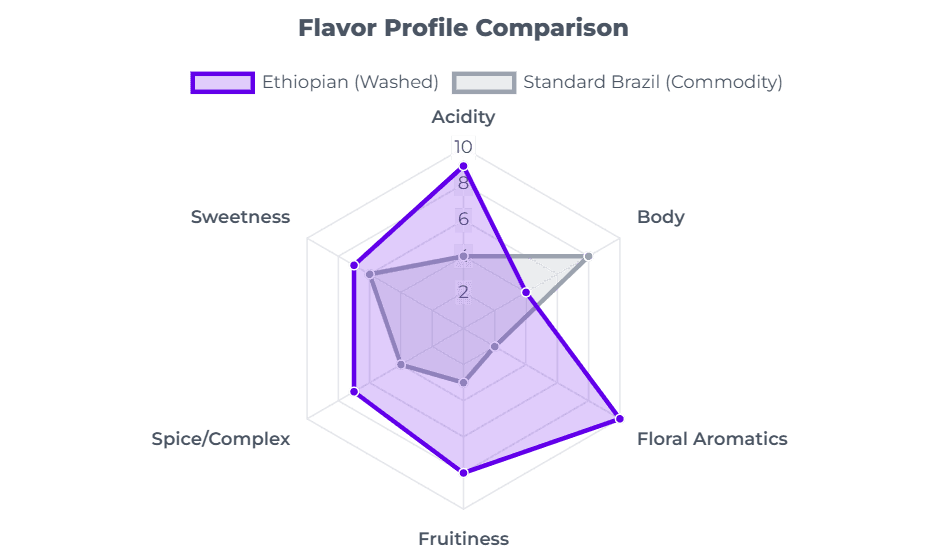
Ethiopian coffees are globally recognized by roasters for their unmatched clarity, vibrancy, and layered aromatics. Depending on the processing method and region, the cup character offers distinct experiences:
Washed Coffees (e.g., Yirgacheffe, Limu): Emphasize transparency and precision. They deliver delicate floral notes such as jasmine and bergamot, bright citrus acidity, and an elegant, tea-like body.
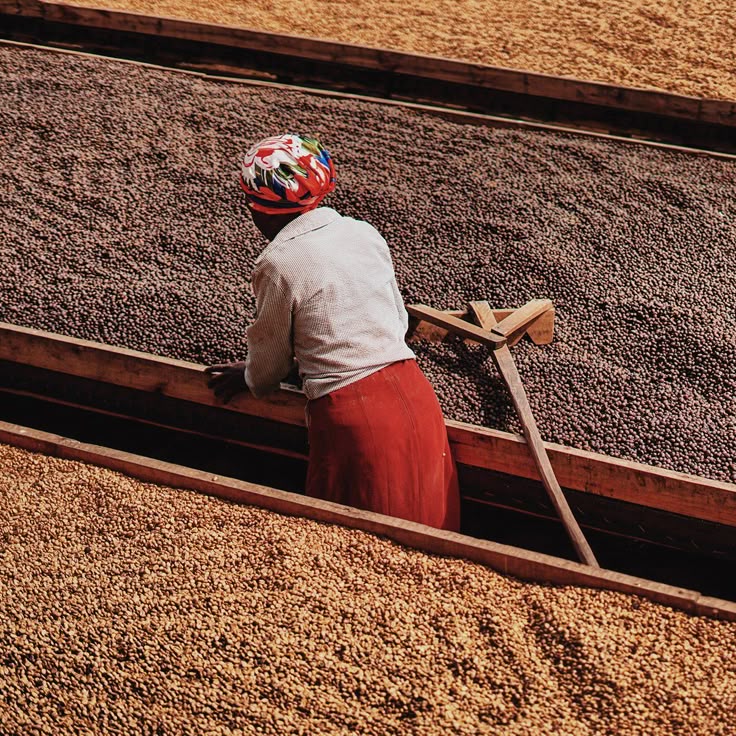
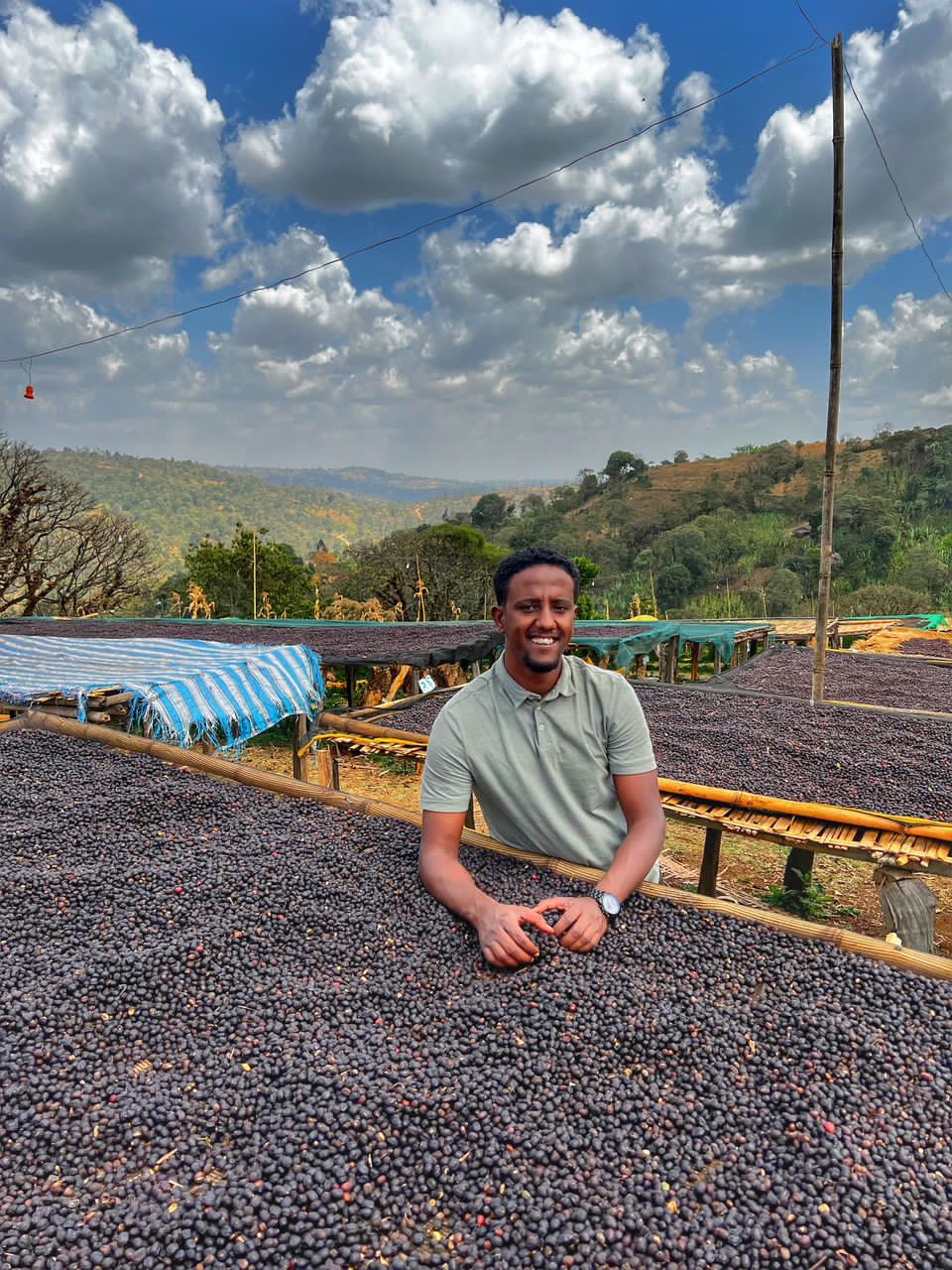
Natural Processed Coffees (e.g., Harrar, Guji): Produce richer, fruit-driven profiles characterized by heavy sweetness, showcasing notes of blueberry, strawberry, tropical fruit, and a distinct wine-like intensity.
Across all major growing regions, sourcing Ethiopian coffee guarantees high aromatic lift, complex structure, and elegant acidity.
Sourcing & Market Context: Traceability Challenges
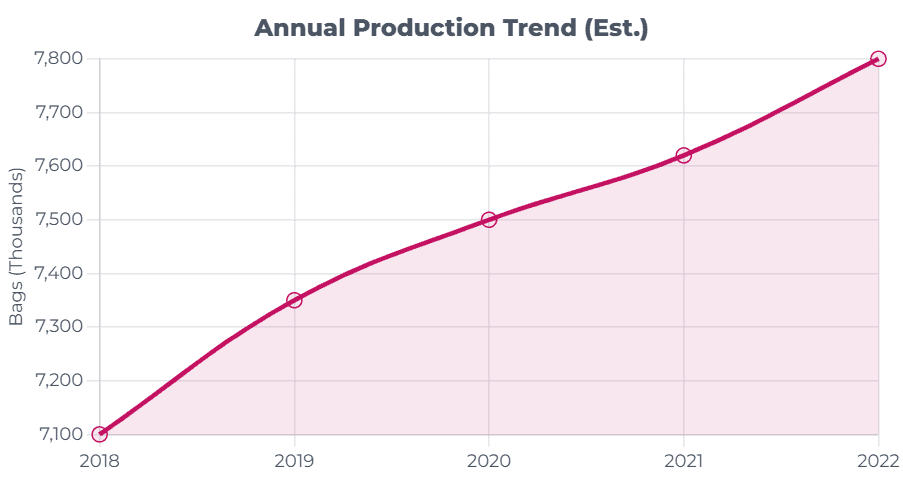
Coffee is Ethiopia’s most important export commodity, accounting for roughly 35% of foreign exchange earnings. The introduction of the Ethiopian Commodity Exchange (ECX) in 2008 improved market transparency but initially compromised the traceability that specialty roasters require.
Landmark reforms in 2017 revolutionized the sector, enabling vertical integration and direct trade, which restored crucial farm-level traceability. Today, most premium specialty coffee is exported outside the ECX system. However, the sector now navigates its newest challenge: the EU Deforestation Regulation (EUDR). This demands precise farm geolocation and compliance proof—posing logistical complexities for millions of smallholder farmers, despite Ethiopia’s inherently forest-friendly coffee systems. At SOVD, we navigate these complexities to ensure a reliable, fully traceable supply chain for our roasting partners.